ATLAS

ATLAS Critical Tourism Studies Asia Pacific
In-Between Conference 2026 – Tourism and Mobilities
Kyoto, Japan
9-10 March, 2026

After receiving your review results, you can RE-submit your abstract by using this form (the deadline for submitting NEW abstracts  has passed)

Information on registration and the registration form can be found HERE 

Conference Thematic

People, things, capital, information, ideas, and technologies are constantly evolving in contemporary society. It is precisely within this context that the “real” is being restructured and re-realised. Rather than ‘stabilizing’ or ‘positivizing’ our existing realities, however, mobility constantly shakes it up to create new realities. Based on this observation, Urry and Sheller advocate the idea of ‘the social as mobility’, arguing that the social is shifting from ‘society’ (which is based on immobility) to ‘mobilities’ (Urry and Sheller 2006).


Of course, Urry and Sheller’s argument requires more thoughtful examination. For example, we ought to think carefully about whether it is appropriate to contrast ‘society’ and ‘mobilities’. If we suppose that what ‘society’ encompasses—that is, ‘the connotation of society’—now includes mobilities, which exhibit new, dynamic renderings, then ‘society’ and ‘mobilities’ ought to be understood to be closely intertwined, rather than opposed to each other.

Taking all of this into account, a more detailed critical analysis of Urry and Sheller is needed now and in the future. If we follow Urry and Sheller’s line of reasoning, however, then the social must appear most clearly in tourism, particularly in the context of mobility. One can no longer consider mobilities in the contemporary world without thinking about tourism and traveling.


Even though tourism numbers sometimes fall due to a variety of events, such as terrorist attacks around the world; infectious diseases like COVID-19 or SARS; natural disasters like the Great East Japan Earthquake; and economic conditions like the financial crisis of 2008, hundreds of millions of people continue to travel. Tourism has become a social phenomenon that creates mobilities and transforms the very foundations of our societies and cultures. This is spelled out explicitly in the concept of ‘tourism mobilities’.


In spite of recent conflicts around the world, contemporary societies continue to be on the move. Tourism is the topos upon which mobile contemporary society comes sharply into view, and as such, research on tourism mobilities has the potential to revolutionise existing discussions in the human and social sciences. Tourism mobilities research must urgently be reflexive in an era of complex entanglements of the global and the local. The significance of research on tourism mobilities lies in its ability to capture societal shifts, and much of this work begins with critical reflection on how we can better shape our collective futures.

Conference Sub-Themes

This in-between conference of the Atlas Critical Tourism Studies – Asia Pacific cohort invites submissions from scholars and practitioners steeped in matters concerning tourism and mobilities in the Asia Pacific, as well as those further afield whose gaze is trained on the Asia-Pacific, and from where the ripple effects of tourism mobilities complexity are felt. Sessions and papers that engage with and reference a broad spectrum of cogent and related entreaties are invited, including but not exclusive to:

  • Mobilities Justice
  • Overtourism and mobilities
  • Climate change, decarbonisation and system change in global society
  • Cultural change, transformation, destruction and regeneration
  • Tourism mobilities, media culture and representation
  • Creativity, innovation and entrepreneurship
  • Governance at multiple scales – local, regional, national and supra-regional
  • Demographic and socioeconomic change, including urbanisation and rural decline
  • Geopolitics, regionalism, and power blocs
  • The host-guest interface, contestations, binaries, and uncertainties
  • Localism, neo-localism and the re-imagining of the local
  • International development assistance and tourism
  • Marketing, demarketing, and the sustainable rebranding of destinations in the age of complexity
  • Therapeutic landscapes and cultures of well-being, spirituality and religious worship
  • Militourism and its assemblages
  • Affects and tourism mobilities
  • Heritage tourism and the historical geographies of people and places

Special Tracks

Special Track 1: Mobility, representation, and imagination – Convenor: Elisa Ivana Pellicanò – Hokkaido University, Japan

Special Track 2: Rural Revitalization via Mobility in East Asia – Convenor: Meng Qu – Hokkaido University, Japan

Special Track 3: Gluing Preconcepted Separations: Mobility as a Praxis – Convenor: Yiqin Zhang – Hokkaido University, Japan

Special Track 4: Visualizing Mobilities in Tourist Spaces – Convenor: Gao Xin – Hokkaido University, Japan

Special Track 5: Heritage tourism management and local community: Examples from Asia – Convenor: Chujun Wang – Ritsumeikan Asia Pacific University, Japan

Special Track 6: Youth Mobilities – Convenor: Sin Harng Luh – Singapore University of Social Sciences, Singapore

Special Track 7: Mobility in/of films – Convenor: Ong Chin Ee; Li Lin – Macao University of Tourism, Macao, China

Special Track 8: Festivals and events and tourism mobilities – Convenor: Willem Coetzee – Western Sydney University, Australia

References

Cresswell, T. (2006). On the move: Mobility in the modern western world, London: Routledge.
Elliott, A. and Urry, J. (2010). Mobile lives, London: Routledge.
Endo, H. (2020). Understanding tourism mobilities in Japan. Taylor & Francis Group.
Hannam, K., Sheller, M., & Urry, J. (2006). Editorial: Mobilities, Immobilities and Moorings. Mobilities, 1(1), 1–22. 
Hannam, K. (2008). Tourism geographies, tourist studies and the turn towards mobilities. Geography Compass, 2(1), 127-139. 
Sheller, M., & Urry, J. (2006). The New Mobilities Paradigm. Environment and Planning A: Economy and Space, 38(2), 207-226. 
Sheller, M., and Urry, J. eds. (2004). Tourism mobilities: Places to play, places in play, London: Routledge.
Sin, H. L., Mostafanezhad, M., & Cheer, J. M. (2021). Tourism geographies in the ‘Asian Century.’ Tourism Geographies, 23(4), 649–658. 
Urry, J. (2007). Mobilities, Cambridge: Polity Press.

Abstract Submission

  • Abstracts should comprise up to 350 words
  • Title no more than 10 words
  • Keywords – at least four specific keywords
  • Include author names and affiliations with the email contact of the lead author
  • Session proposals should include up to 4 papers and should be submitted as one, and include a brief session description of around 100 words, inclusive of the session title

Abstracts should be submitted to ATLAS by using this form (submissio is closed).

Publication Opportunities

ATLAS Review for Tourism and Leisure is a peer-reviewed publication operated by ATLAS that supports strong conference papers: https://atlas-euro.org/resources/atlas-review-for-tourism-and-leisure/. Deadline to submit for consideration in ATLAS Review is January 15, 2026 to the co-chairs Jamie Gillen and Chin Ee Ong (admin@atlas-euro.org).


Additionally, editors-in-chief from Tourism Geographies and Tourist Studies will be at the conference and will be seeking ideas for special issues and exemplary papers for submission to these journals.

Pre-Conference Workshop
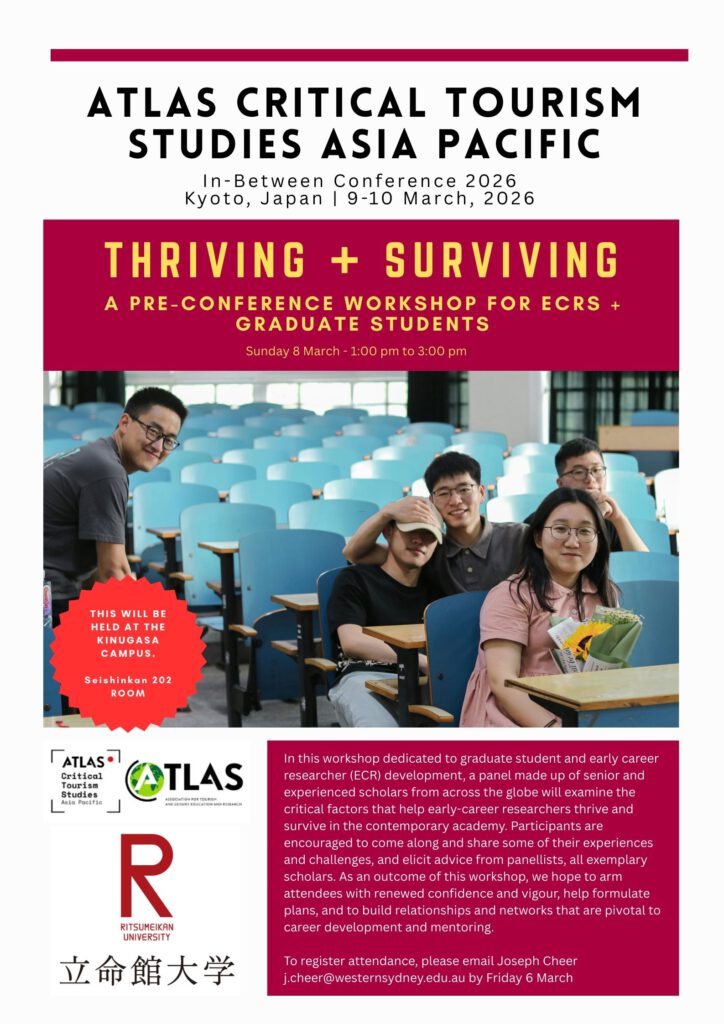
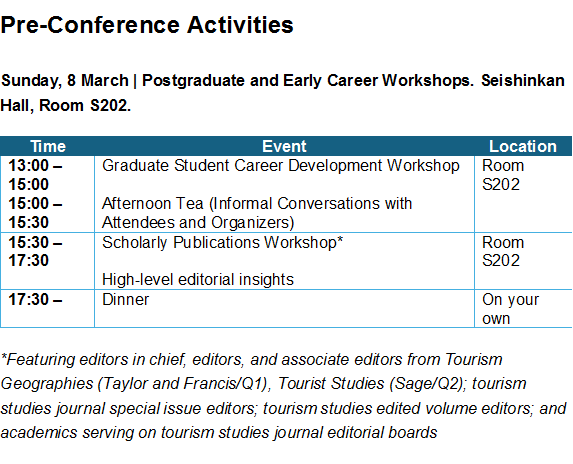
PhD students session (morning) and Publication workshop (afternoon)

Sunday 8 March
Ritsumeikan Kinugasa campus, 1000-1600
Seishinkan Hall
Room: S202


Cost: EURO 20
Payable alongside the registration fee.


Program Pre-Conference Workshop

10.00 – 12.30 Morning session: PhD and Early Career Workshop
This workshop will be led by a diverse group of scholars, at all career stages and based across the Asia Pacific region. The key aim will be to give attendees insights and strategies to help guide career development trajectories.

12.30 – 13.30 Break – Lunch provided

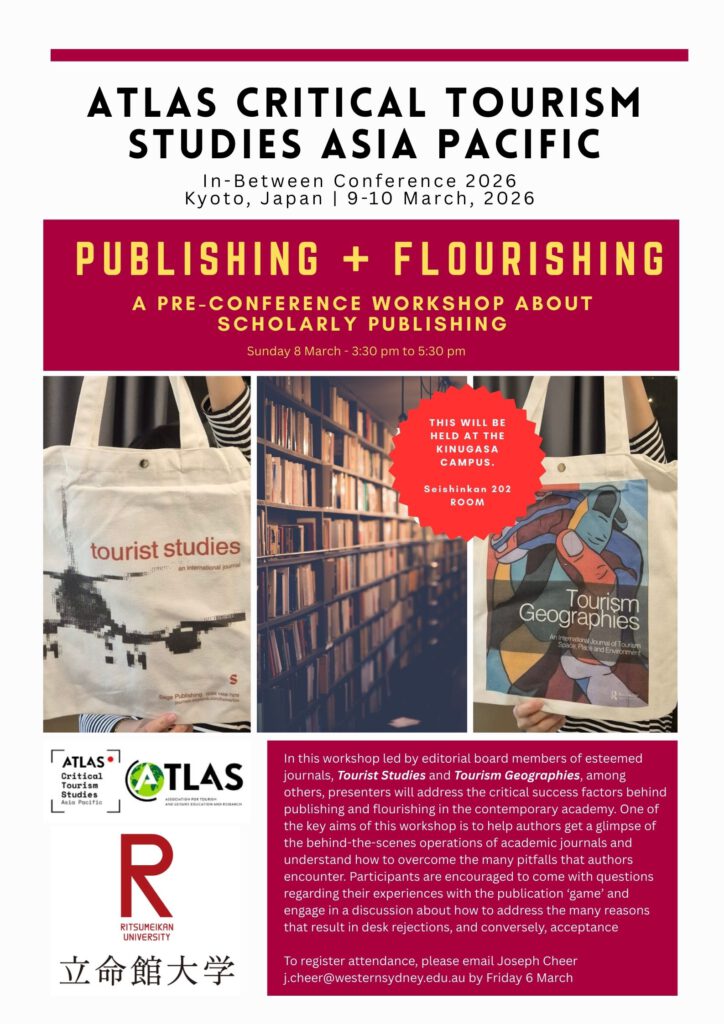
13.30 – 16.00 Afternoon session: Publishing workshop
This workshop will be led by scholars who hold senior editorial positions in key tourism research journals including Tourist Studies and Tourism Geographies, among others. The key aim will be to help give researchers critical insights into getting their research published.

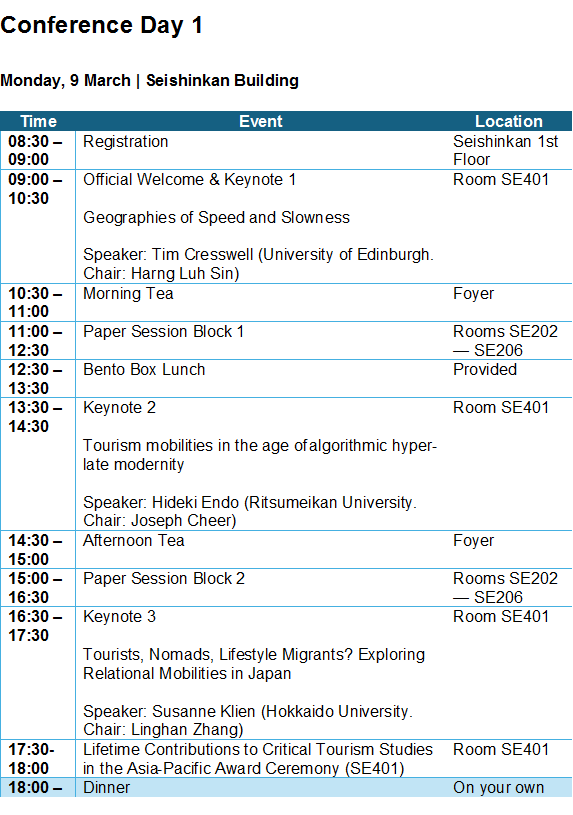
Provisional Program

Sunday March 8, 2026
10:00-12:30 PhD and Early Career Workshop
12:30-13:30 Lunch
13:30-16:00 Publishing Workshop


Monday March 9,2026
9:30-10:00 Registration
10:00-12:00 Opening address and keynotes
12:00-13:30 Lunch
13:30-15:00 Parallel Sessions
15:00-15:30 Coffee break
15:30-16:30 Keynote
16:30-18:00 Parallel Sessions
18:00-21:00 Gala Dinner


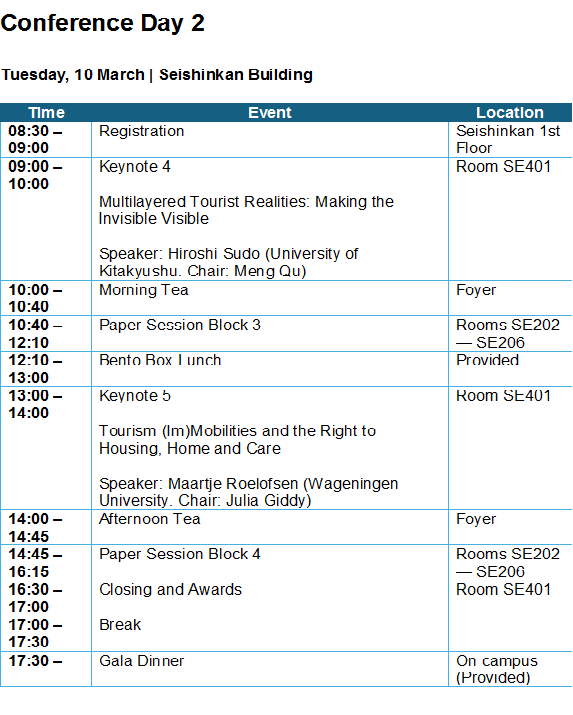
Tuesday March 10,2026
9:30-10:00 Registration
10:00-12:00 Keynotes
12:00-13:30 Lunch
13:30-15:00 Panel discussions
15:00-15:30 Coffee break
15:30-17:00 Parallel Sessions
17:00-18:00 Concluding remarks


Wednesday March 11, 2025
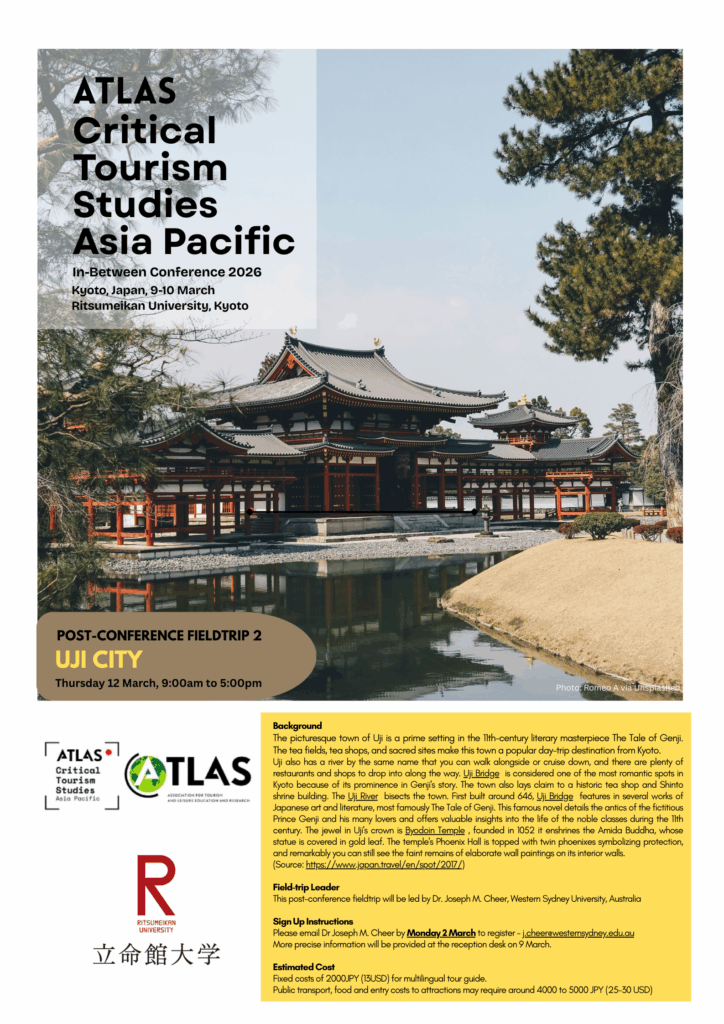
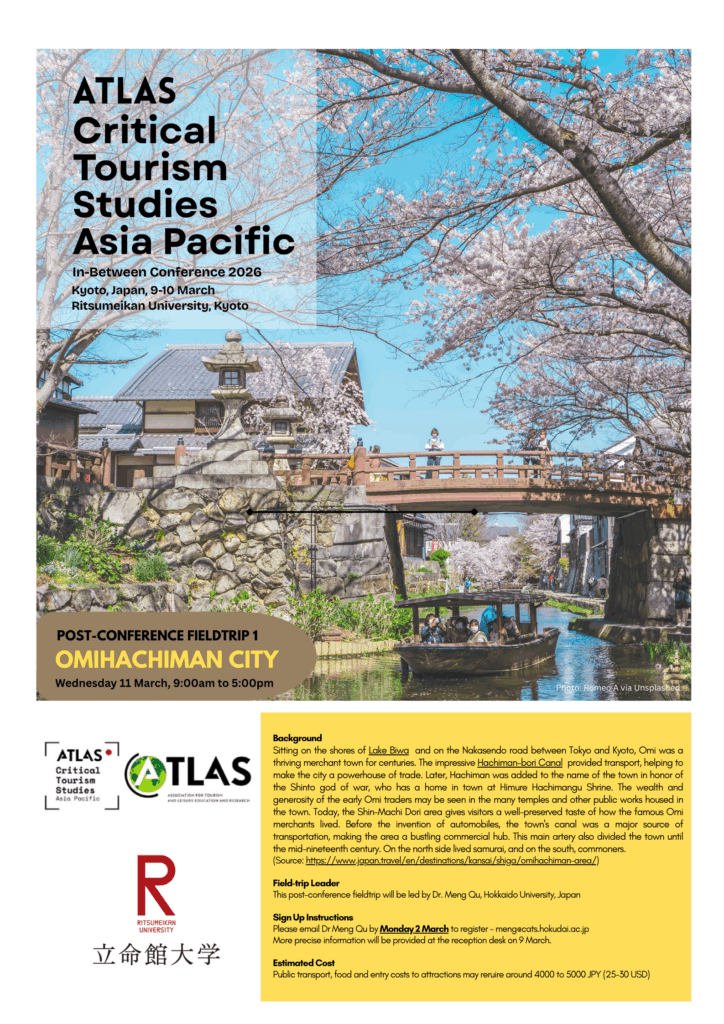
10:00-16:30 Day trip to the peri-urban sites of Kyoto

Social Programme

Two Kyoto peri-urban area day trips (for an additional fee paid directly to tour organizers). More information coming soon.

Important Dates

Deadline for abstracts October 12, 2025
October 26, 2025
Registration open (Early Bird Fee)October 31, 2025
Registration (Regular Fee)November 30, 2025
Deadline for registrationsJanuary 23,  2026

Registration and Cancellation Policy

Information on registration and the registration form can be found HERE 


If written cancellation is received before February 15th, 2026 a refund of all meeting fees will be made, minus an administration fee of € 50. No refund will be possible after February 15th, 2026, but substitute delegates can be nominated.

Organisation

Co-Chairs
Professor Chin Ee Ong, Macao University of Tourism, Macao China
Associate Professor Jamie Gillen, University of Auckland, New Zealand
Dean and Professor Hideki Endo, Ritsumeikan Universityu, Japan


Organizing Committee
Associate Professor Husna Zainal Abidin, Wakayama University, Japan
Professor Joseph Cheer, University of Western Sydney, Australia
Associate Professor Jeremy Lemarie, Université de Reims Champagne-Ardenne, France
Associate Professor Meng Qu, Hokkaido University, Japan
Associate Professor Harng Luh Sin, Singapore University of Social Sciences, Singapore
Associate Professor Ding Xu, Sun Yat-Sen University, China  
Assistant Professor Xueke (Stephanie) Yang, Beijing Normal University-Zhuhai, China
Assistant Professor Zhang Linghan, Kanazawa University, Japan 

About Ritsumeikan University

Ritsumeikan was first founded as a private academy in 1869 by Prince Saionji Kinmochi. In 1900, Kojuro Nakagawa (the former secretary of Prince Saionji) established the Kyoto Hosei School, a law school that eventually adopted the Ritsumeikan name with the prince’s permission and was awarded full university status in 1922.
 
Today, Ritsumeikan University is a prestigious private university in Japan, known for its commitment to academic excellence, international collaboration, and innovative research across diverse fields such as law, literatures, philosophy, geography, history sciences, cultural studies, sociology, international relations, physical science, engineering, economics and management sciences. With 4 campuses in Kyoto, Osaka, and Shiga, it offers both Japanese and English-taught programs and fosters a global learning environment. Undergraduate students in this university are more than 32,000 and graduate students are more than 3,000.
 
Ritsumeikan University aims to become a next-generation research university in the near future, where research and education can be organically recombined. By doing so, we strive to become a university that can create the essential value that society deserves for our future.

About ATLAS Critical Tourism Studies Asia-Pacific (ACTS-AP) 

Atlas Critical Tourism Studies-Asia Pacific (ACTS-AP) is an international, interdisciplinary consortium for scholars, tourism practitioners and professionals, community members, travelers and travel writers. ACTS-AP facilitates networking opportunities, the exchange of ideas, research collaboration as well as conversations that critically address contemporary issues in tourism studies.

ACTS-AP recognizes the multiple stakeholders in tourism. We welcome the diverse and sometimes disparate perspectives that these stakeholders bring to the table as we endeavor to broaden our understanding of tourism as both a subject of scholarly critique and one of the largest industries in the world. In this way, we seek to critically engage with and start new conversations around a multitude of themes and issues in tourism studies, centred in and drawn from the Asia-Pacific.

Conference Venues

Ritsumeikan Kinugasa campus

Getting to Ritsumeikan Kinugasa campus: https://en.ritsumei.ac.jp/access/

Campus access map and taxi map: https://en.ritsumei.ac.jp/file.jsp?id=246772&f=.pdf

Exact conference room locations announced when the full programme goes live in February, 2026.

Pre-Conference Workshop location is S202, Seishinkan Hall

Recommended Hotels in Kyoto

An overview can be downloaded HERE

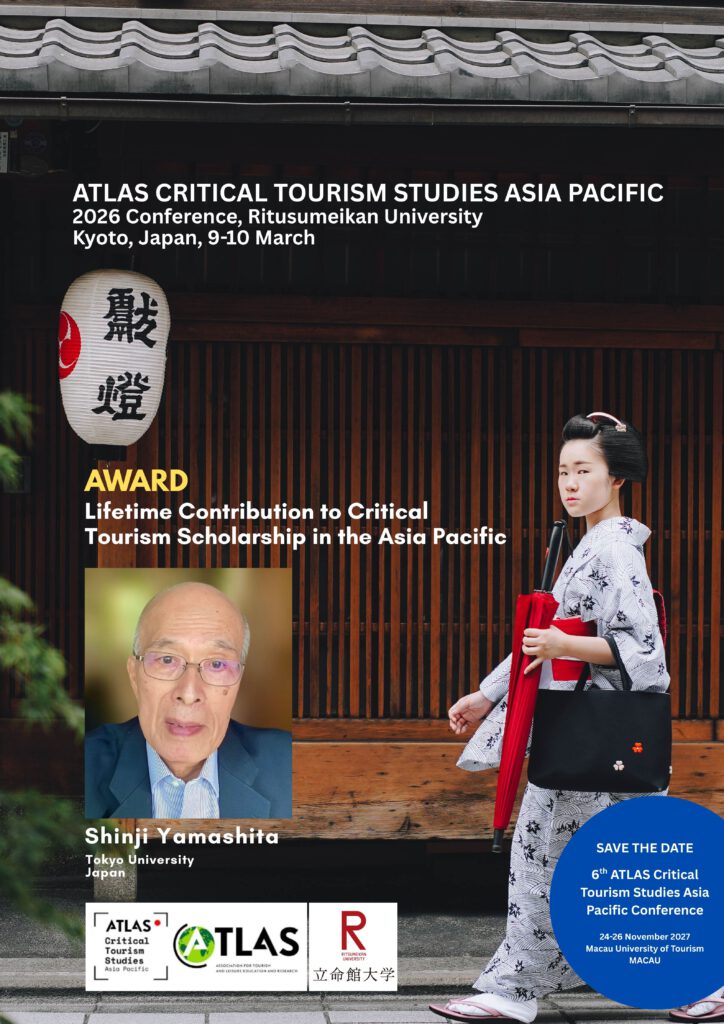
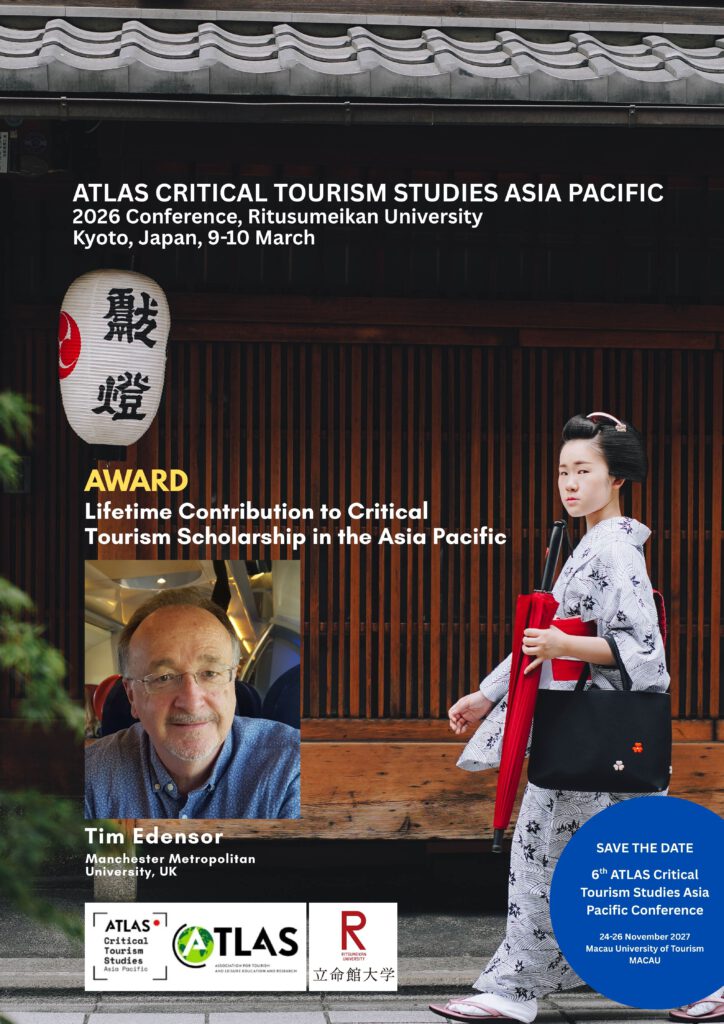
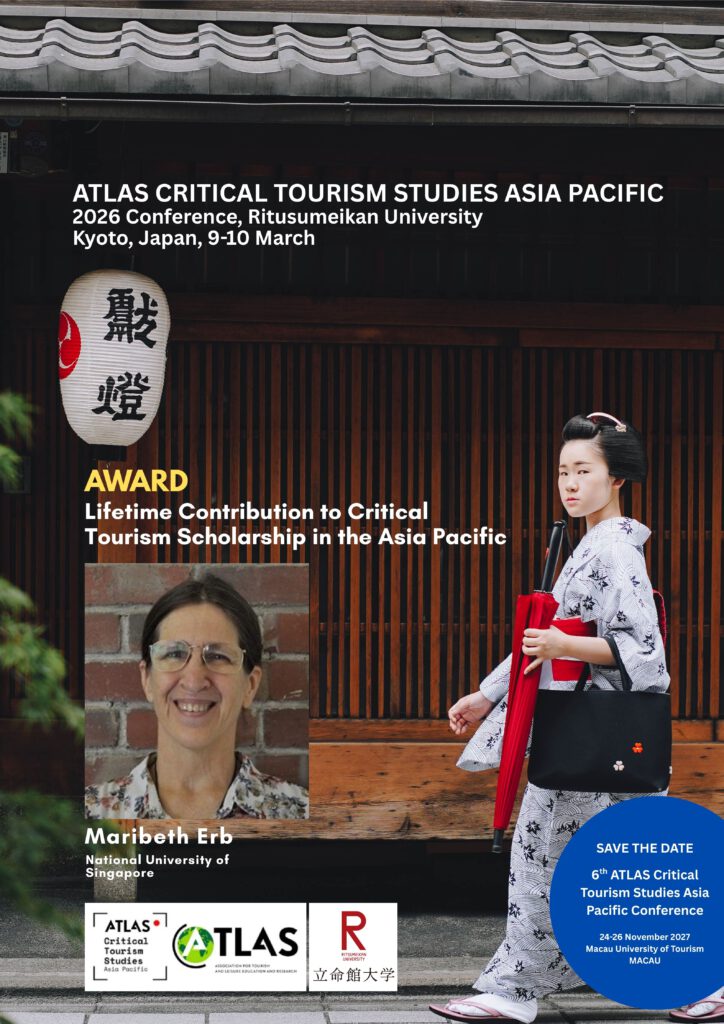
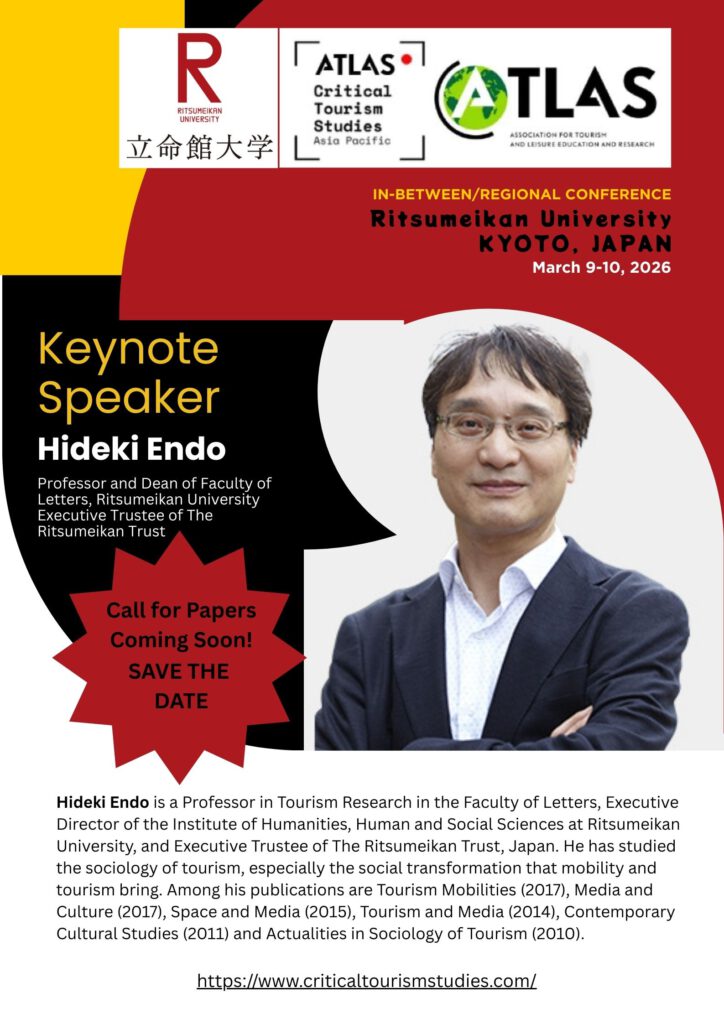
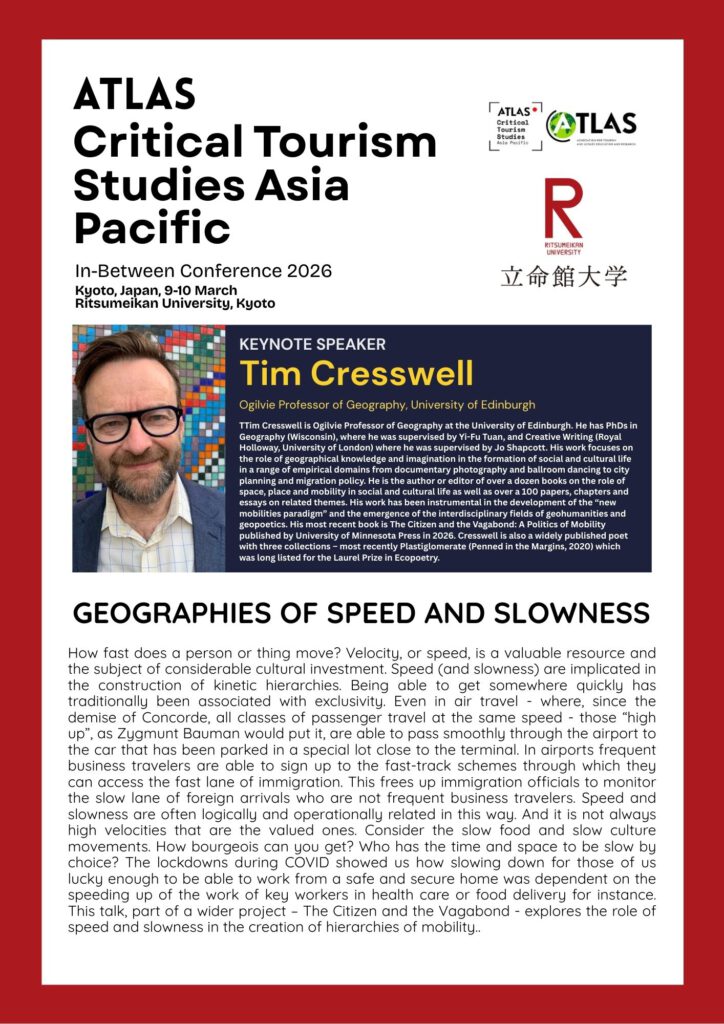
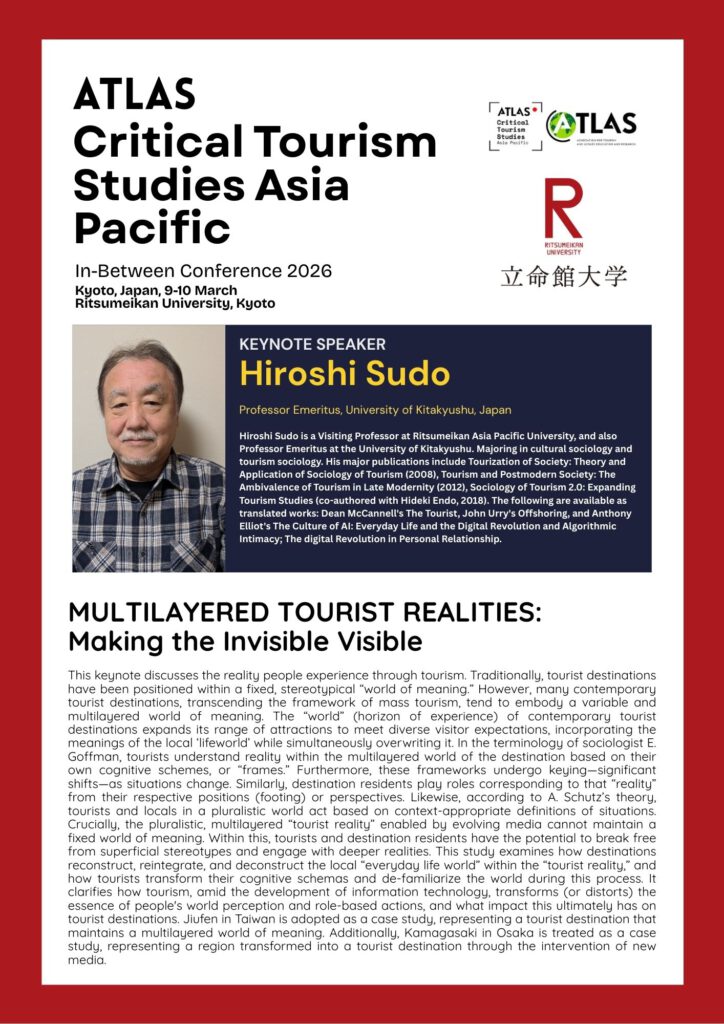
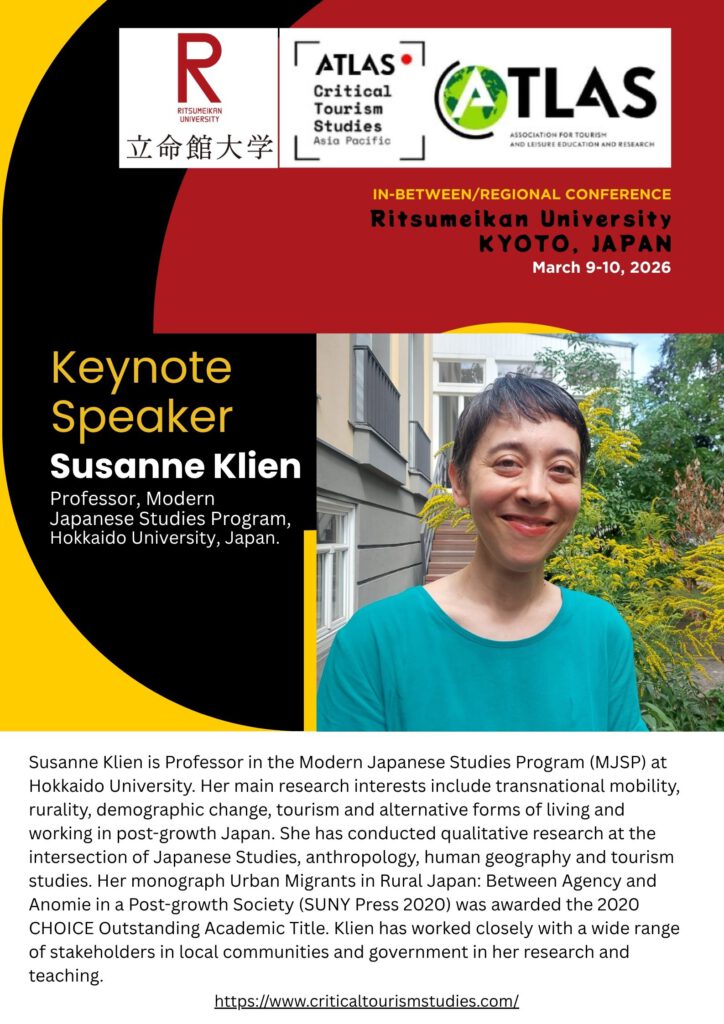
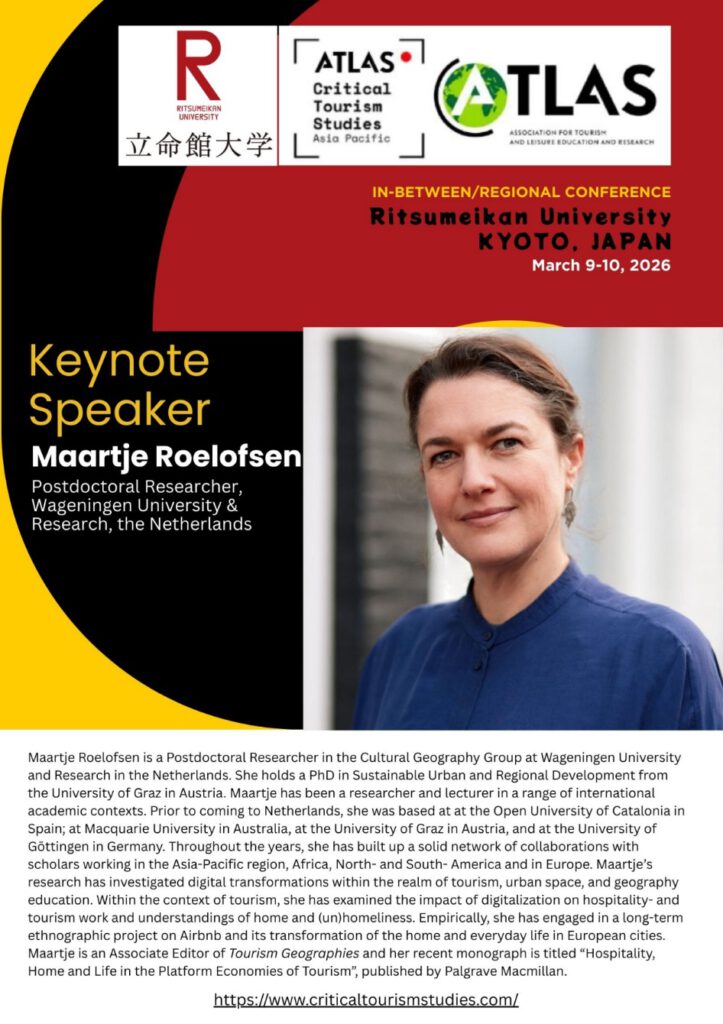
Keynote Speakers

Registration

  • Contact
    Please contact: e-mail admin@atlas-euro.org
     
  • Registration
    Submit this form to register for the conference 
     
  • Abstract submission form
    After receiving your review results, you can RE-submit your abstract by using this form (the deadline for submitting NEW abstracts  has passed)
Scroll to Top