

ATLAS Annual Conference 2027
Destinations for the Future: Changing Places, Practices and Policies
Viana do Castelo, Portugal
September 8-11, 2027
Introduction
Viana do Castelo welcomes researchers, practitioners and policymakers to the fourth ATLAS Annual Conference to be held in the city, a gathering that first convened here in 1997, returned in 2007 and 2017, and now reconvenes in 2027 to reckon with a tourism world that has changed almost beyond recognition, and that is being asked to change further still.
The conference theme, Destinations for the Future: Changing Places, Practices and Policies, invites us to interrogate what kind of futures are being imagined, for whom, by whom, and at whose expense. The last decade has exposed with unusual clarity the structural contradictions of tourism as a development paradigm. Degrowth frameworks have moved from provocative minority positions to serious objects of empirical investigation (Murray et al., 2023). Regenerative approaches have emerged as a distinct paradigm, reframing tourism as a living system oriented toward mutual flourishing rather than extraction (Bellato & Pollock, 2025; Bellato et al., 2022). The entanglements of tourism with housing markets, financialisation, and the right to the city have been powerfully theorised through the lens of tourism-led rentier capitalism (Wijburg et al., 2024) and touristification as place-based displacement (Cocola-Gant, 2023).
Meanwhile, the climate emergency has shifted from background condition to foreground urgency, forcing the field to confront not just the environmental footprint of travel but the deeper question of whether the continuous expansion of mobility is compatible with liveable futures for places and people (Bianchi & Milano, 2024).
At the same time, new complexities have unsettled older analytical frameworks. The digital transformation and artificial intelligence are reshaping the labour relations, the spatial organisation, and the political economy of destinations in ways that are only beginning to be understood. Digital nomadism and the blurring of work and leisure mobility challenge the categories through which tourism has traditionally been studied. Cultural tourism, too, is undergoing a deeper epistemological reckoning — moving from a product-centred view of heritage consumption toward an understanding of tourism as embodied social practice, co-created between hosts, visitors and the places they share (Richards, 2021, 2025). And across all of this, communities, themselves heterogeneous, fractured and differentially positioned, are asserting new claims: over their neighbourhoods, their cultures, their coastlines, and their right to shape the terms on which visitors arrive.
It is in this context that we return to Viana do Castelo, a city that has itself navigated the tensions between heritage and change, between the living culture of its fishing and artisan traditions and the pressures of tourism development along Portugal’s increasingly visited northern coast. The thirty years that have passed since ATLAS first gathered here are not merely a biographical milestone for the association; they constitute a natural moment for the kind of critical stocktaking this conference invites. What has changed in how we understand destinations? What has not changed, and why? What theoretical resources does the field now have that it lacked in 1997, and where do the most significant intellectual gaps remain?
We invite contributions from across the social sciences and humanities, from practice-based and policy-engaged research, and from scholars at all career stages. We are particularly interested in work that crosses disciplinary boundaries, challenges prevailing assumptions, and takes seriously the voices of those: residents, communities, workers, non-human actors, who are too often absent from the tourism research conversation.
References
Bellato, L. & Pollock, A. (2025). Regenerative tourism: A state-of-the-art review. Tourism Geographies, 27(3-4), 558-567.
Bellato, L., Frantzeskaki, N. & Nygaard, C.A. (2022). Regenerative tourism: A conceptual framework leveraging theory and practice. Tourism Geographies, 25(4), 1026-1046.
Bianchi, R.V. & Milano, C. (2024). Polycrisis and the metamorphosis of tourism capitalism. Annals of Tourism Research, 103731.
Cocola-Gant, A. (2023). Place-based displacement: Touristification and neighborhood change. Geoforum, 138, 103665.
Fletcher, R. & Neves, K. (2012). Contradictions in tourism: The promise and pitfalls of ecotourism as a manifold capitalist fix. Environment and Society, 3(1), 60-77.
Hall, C.M. (2009). Degrowing tourism: Decroissance, sustainable consumption and steady-state tourism. Anatolia, 20(1), 46-61.
Murray, I., Blázquez-Salom, M., Blanco-Romero, A., Cañada, E. & Fletcher, R. (2023). Tourism and degrowth. Journal of Sustainable Tourism, 32(4), 547-557.
Richards, G. (2021). Rethinking cultural tourism. Cheltenham: Edward Elgar.
Richards, G. (2025). Cultural tourism: An integrative review. Tourism & Management Studies, 21(4), 19-31.
Wijburg, G., Aalbers, M.B., Conte, V. & Stoffelen, A. (2024). Tourism-led rentier capitalism: Extracting rent and value from tourism property investment. Antipode, 56(2), 715-737.
Keynote speakers
Proposed Keynote Speakers are:
1. Roberta Garibaldi, University of Bergamo, Italy
2. John Swarbrooke, University of Plymouth, UK
3. Elisabete Kastenholz, University of Aveiro
Conference Themes
The main theme of the conference is:
Destinations for the Future: Changing Places, Practices and Policies
We welcome abstracts in the following areas:
1. Reimagining destination governance
From traditional DMOs to place organisations: multi-stakeholder co-governance, participatory planning, and the evolving role of public policy in shaping destination futures, including new models of accountability, legitimacy, and democratic participation.
2. Regenerative and post-growth tourism
Moving beyond the sustainability paradigm toward regenerative and degrowth-informed models. Questioning the growth imperative, exploring sufficiency economies, steady-state tourism, and reimagining what success means for destinations and host communities.
3. Overtourism, touristification and the right to the city
Tourist taxes, short-term rental regulation, housing affordability, spatial justice, and community resistance movements. The politics of who cities and destinations are for, and how policy can rebalance the interests of residents and visitors.
4. Place identity, heritage and authenticity in transition
How destinations negotiate cultural identity, heritage narratives, and authenticity under tourism pressure, including decolonial perspectives, intangible heritage, dark tourism, and the politics of whose culture gets represented and commodified.
5. Community, belonging and host–guest relations
Resident perceptions, anti-tourism sentiment, social cohesion, and the conditions under which tourism contributes to, rather than erodes, local quality of life, belonging, and community wellbeing.
6. Digital transformation, AI and smart destinations
Artificial intelligence, platform economies, datafication of destination management, immersive and extended reality technologies, and the new inequalities and opportunities these create for places, visitors, and workers in tourism.
7. Creative and cultural tourism as placemaking
The role of creativity, arts, gastronomy, intangible heritage, and cultural tourism in place identity, urban and rural regeneration, social inclusion, and the wellbeing of both visitors and host communities.
8. Slow travel, new mobilities and digital nomadism
Climate-conscious transport choices, slow tourism practices, the rise of digital nomadism and long-stay tourism, working from anywhere, and how these shifting mobility cultures are reshaping both destination demand and policy responses.
9. Tourism, climate change and coastal/rural futures
Adaptation, resilience, and reinvention in climate-vulnerable destinations, with particular attention to Atlantic coastal and rural contexts, including the decarbonisation of tourism transport, managed retreat, and blue/green tourism transitions.
10. Tourism taxation, pricing and economic redistribution
Tourist levies, visitor pricing models, revenue redistribution mechanisms, economic leakage, and the political economy of who captures tourism’s value and who bears its costs, with lessons from European and global policy experiments.
Conference Venue

Venue Location
ESTG – IPVC Viana do Castelo, Portugal
https://maps.app.goo.gl/DrczpfbDt8FvjfB67
Viana do Castelo
Located in the Minho region of northern Portugal at the mouth of the Lima River and the edge of the Atlantic, Viana do Castelo is one of Portugal’s most distinctive historic cities. A UNESCO Creative City of Folk Arts and Crafts, it is known for its living traditions of embroidery, gold filigree and the Viana costume, its Manueline and Renaissance architecture, and its vibrant fishing and maritime heritage. The city has hosted ATLAS conferences in 1997, 2007 and 2017, making it one of the association’s most enduring venues.
Transport
How to get to Viana do Castelo
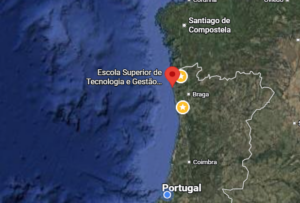
The closest airport is Porto
Getting to Viana from the airport
Option of Metro + Train
It is easy to get to or from the airport by metro to the centre of Porto. Use Line E (color violet). Takes between 20 and 30 minutes, depending on the time and day of the week.
If you opt to visit the historical area of Porto (world heritage site) and the port wine cellars on the other side of the Douro River, take the metro to the Trindad stop. It is just a few minutes’ walk to the River. Then take the train to Viana do Castelo from the S. Bento train station. See timetable at
https://www.cp.pt/passageiros/en/
Or, if you rather not visit Porto and go straight to Viana do Castelo, take the Metro do Campanhã station and then the train. Same site for the timetable.
Option of the airport shuttle
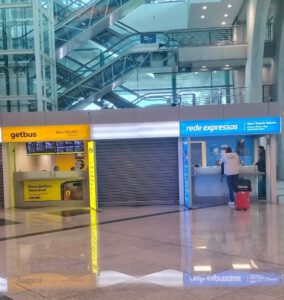
OPTION 1 – Getbus
https://www.getbus.eu/en/viana-do-castelo-aeroporto
(as you come out of the terminal building, located on the far-right hand side; there is an office inside the terminal building next to the shuttle stop; approximately €12 each way)
OPTION 2 – Rede
Expressos https://rede-expressos.pt/en/timetables
(as you come out of the terminal building, turn right and go straight towards the bus station; there is an office in the far right hand side of the terminal building; varies between €3 and €12 each way)
Important: To guarantee your seat, the shuttle service must be booked in advance.
For additional information, please do not hesitate to contact the Conference Organization Team.
Call for Special Tracks
The conference organizers invite proposals for organizing special tracks during the conference and encourage ATLAS Special Interest Groups and Chapters to plan meetings and workshops within or alongside the conference programme. Please contact admin@atlas-euro.org before January 15th 2027 if you have any plans to organize a SIG meeting, a project meeting or a special track during this conference.
Abstract Submission
All abstracts will be subject to double-blind review by members of the scientific committee. Acceptance of a submission will be based on: theoretical and empirical significance; methodological soundness; relevance to the theme of the conference and logical clarity. The official language of the conference is English. Abstracts should have between max. 500 words. The title should be no more than 12 words. Authors should also indicate which conference topic their proposed paper relates to.
Abstracts should be submitted to ATLAS by using this form. (the form is not activated yet)
Important Dates
| Abstract submission | February 15th 2024 |
| Notification of acceptance | March 15th 2027 |
| Extended abstract submission | April 15th 2027 |
| Conference | September 8-11th 2027 |
| Full paper submission | November 10th 2027 |
Registration
- Contact
- Please contact: e-mail admin@atlas-euro.org
- Registration
- Submit this form to register for the conference *** FORM NOT ACTIVATED YET ***
- Abstract submission form
- Submit this form to submit an abstract for the conference *** FORM NOT ACTIVATED YET ***